Real Estate Lead Generation: 15 Strategies Top Agents Use to Never Run Out of Clients

Key Takeaways
Master real estate lead generation with 15 proven strategies that top-producing agents use to consistently attract buyers and sellers. From digital marketing to referral systems, this is the only guide you need.
18 min read by ListingFlare Team
Every real estate agent faces the same fundamental challenge: where will the next client come from? The difference between agents who close 5 deals a year and those who close 50 comes down to one thing: a repeatable, scalable real estate lead generation system. Not luck. Not charm. A system.
The real estate industry has changed dramatically. Cold calling from a phone book is dead. Knocking on 200 doors a Saturday afternoon gets you a handful of conversations and a lot of sore feet. Meanwhile, 97 percent of home buyers now start their search online. If your lead generation strategy does not meet buyers and sellers where they already are, on their phones, in their inboxes, and on social media, you are leaving money on the table every single day.
This guide breaks down 15 proven real estate lead generation strategies that top producers use to build a consistent pipeline of qualified buyers and sellers. We will cover both paid and free methods, online and offline tactics, and short-term wins alongside long-term systems. Whether you are a new agent building from scratch or a veteran looking to scale, every strategy here is actionable and backed by data.
What Is Real Estate Lead Generation and Why It Matters
Real estate lead generation is the process of attracting potential buyers and sellers and converting them into contacts you can nurture into clients. A lead is anyone who has expressed interest in buying, selling, or investing in real estate and has given you their contact information, whether that is a name, phone number, or email address.
Lead generation matters because real estate is a relationship-driven business with a long sales cycle. The average buyer takes 10 to 12 weeks from first search to closing. Sellers often think about listing for months before making a move. If you are not building relationships with prospects early in their journey, another agent will be there when they are ready to act.
Here is the math that makes this urgent. If you convert 2 percent of your leads into closings (a solid industry average), you need 50 leads to close one deal. If your goal is 24 closings this year, you need 1,200 leads flowing into your pipeline, roughly 100 per month. That does not happen by accident. It happens with intentional, consistent lead generation systems running in the background while you are showing homes and negotiating contracts.
The Two Types of Real Estate Leads You Need to Understand
Before diving into strategies, you need to understand the difference between inbound leads and outbound leads because they require completely different approaches.
Inbound Leads
Inbound leads come to you. They find your website through Google, see your social media content, click on your ad, or visit your open house. Inbound leads are generally higher quality because they are self-selecting. They already have some level of interest and intent. The cost per lead is lower over time, but inbound systems take longer to build.
Outbound Leads
Outbound leads are people you reach out to directly. Cold calls, door knocking, direct mail, and paid lead purchases all fall into this category. Outbound methods give you more control over volume because you can scale up immediately by making more calls or sending more mailers, but the leads are typically colder and require more follow-up to convert.
The best agents do not choose one over the other. They build both. Outbound fills the pipeline today while inbound builds the machine that generates leads tomorrow with less effort. The strategies below cover both, and the order is intentional. We start with the highest-impact digital strategies first.
1. Build a Lead-Capturing Website That Works 24/7
Your website is the hub of your entire lead generation system. Every ad you run, every social media post you publish, every business card you hand out should drive traffic back to a website that is designed to capture contact information. Yet most real estate agent websites fail at this because they are built to look pretty, not to convert.
A high-converting real estate website needs:
- IDX integration - Let visitors search active listings directly on your site so they do not leave for Zillow or Realtor.com
- Lead capture forms on every page - Home valuation tools, market reports, buyer guides, and property alerts all require an email to access
- Speed - Pages that load in under 3 seconds. Google penalizes slow sites and buyers bounce instantly
- Mobile-first design - Over 76 percent of home searches happen on mobile devices
- Clear calls to action - Every page should make it obvious what the visitor should do next: schedule a showing, get a home valuation, or download a guide
The most important metric is not how much traffic your site gets. It is your conversion rate, the percentage of visitors who become leads. A site getting 500 visitors per month with a 5 percent conversion rate (25 leads) outperforms a site getting 2,000 visitors with a 0.5 percent rate (10 leads). Focus on conversion first, traffic second.
2. Create Single-Property Websites for Every Listing
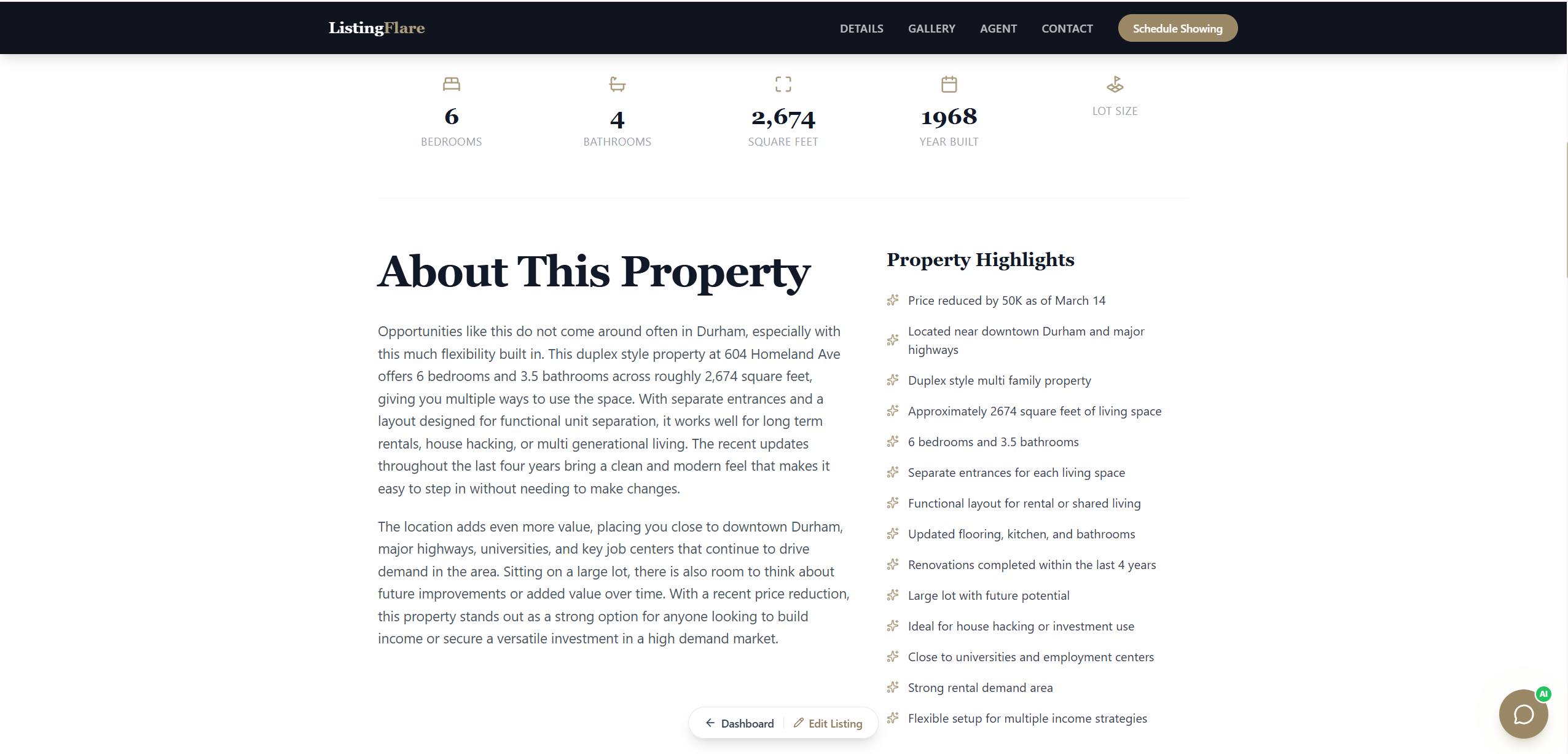
Here is a strategy most agents overlook that can immediately change your lead flow: create a dedicated website for each listing instead of relying solely on MLS syndication.
When your listing appears on Zillow, Realtor.com, or Redfin, you are competing with dozens of other listings, other agents' ads, and platform algorithms designed to keep the buyer on the portal, not send them to you. A single-property website eliminates all of that noise. One listing. One website. One agent. Every lead is yours.
Put the URL on your yard sign, your print flyers, your social media posts, and your email blasts. When a buyer scans the QR code on your for-sale sign at 9 PM on a Tuesday, they land on a beautiful, distraction-free page with every detail about the property, a full photo gallery, neighborhood data, and a way to contact you directly.
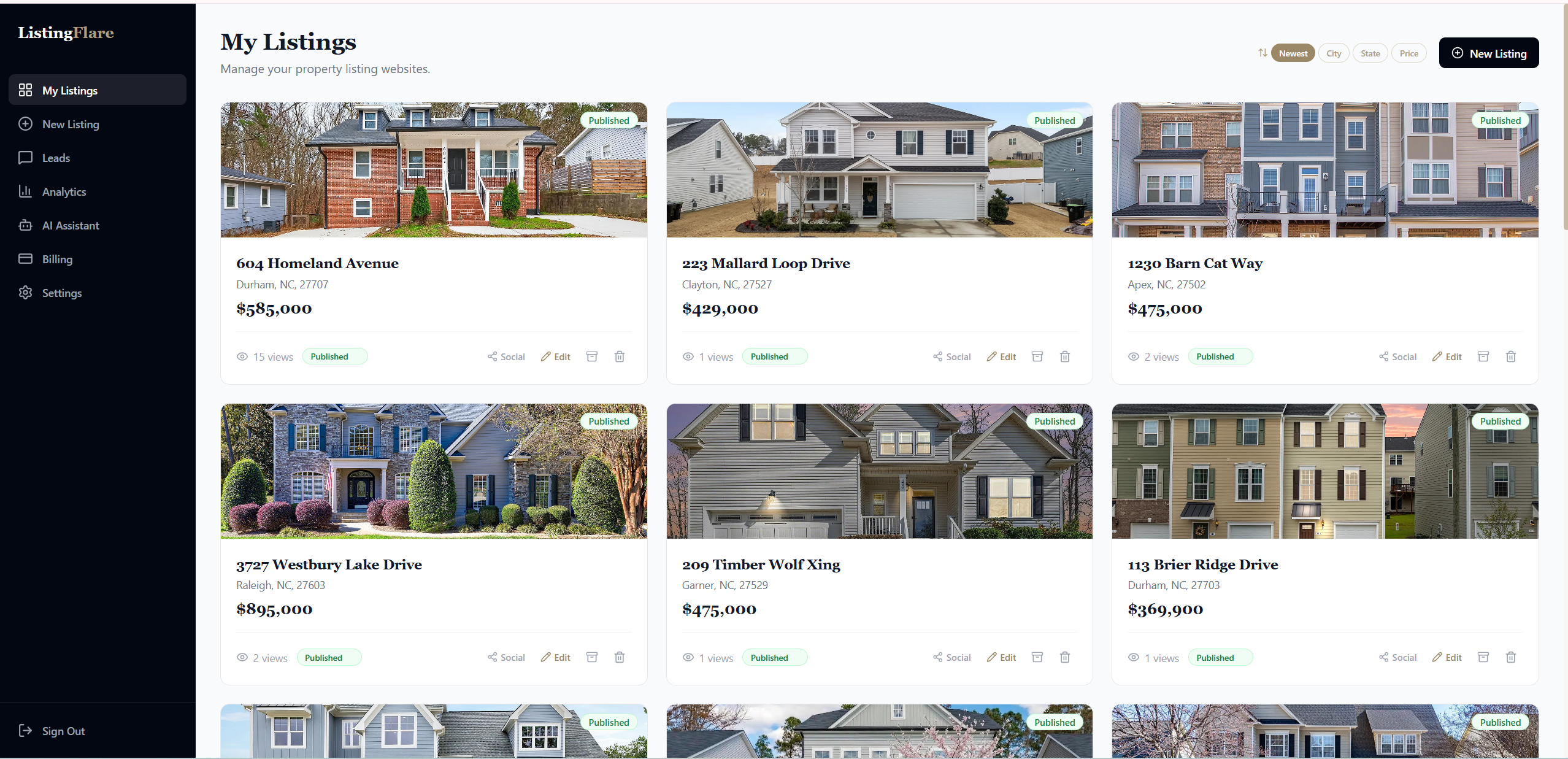
ListingFlare makes this effortless. You can create a professional single-property website in under five minutes, complete with an AI-powered chatbot that answers buyer questions and captures lead information around the clock. When a buyer asks "What school district is this in?" at midnight, the chatbot provides the answer and collects their contact info. You wake up to a qualified lead. See a live demo here.
3. Dominate Local SEO to Attract Organic Leads
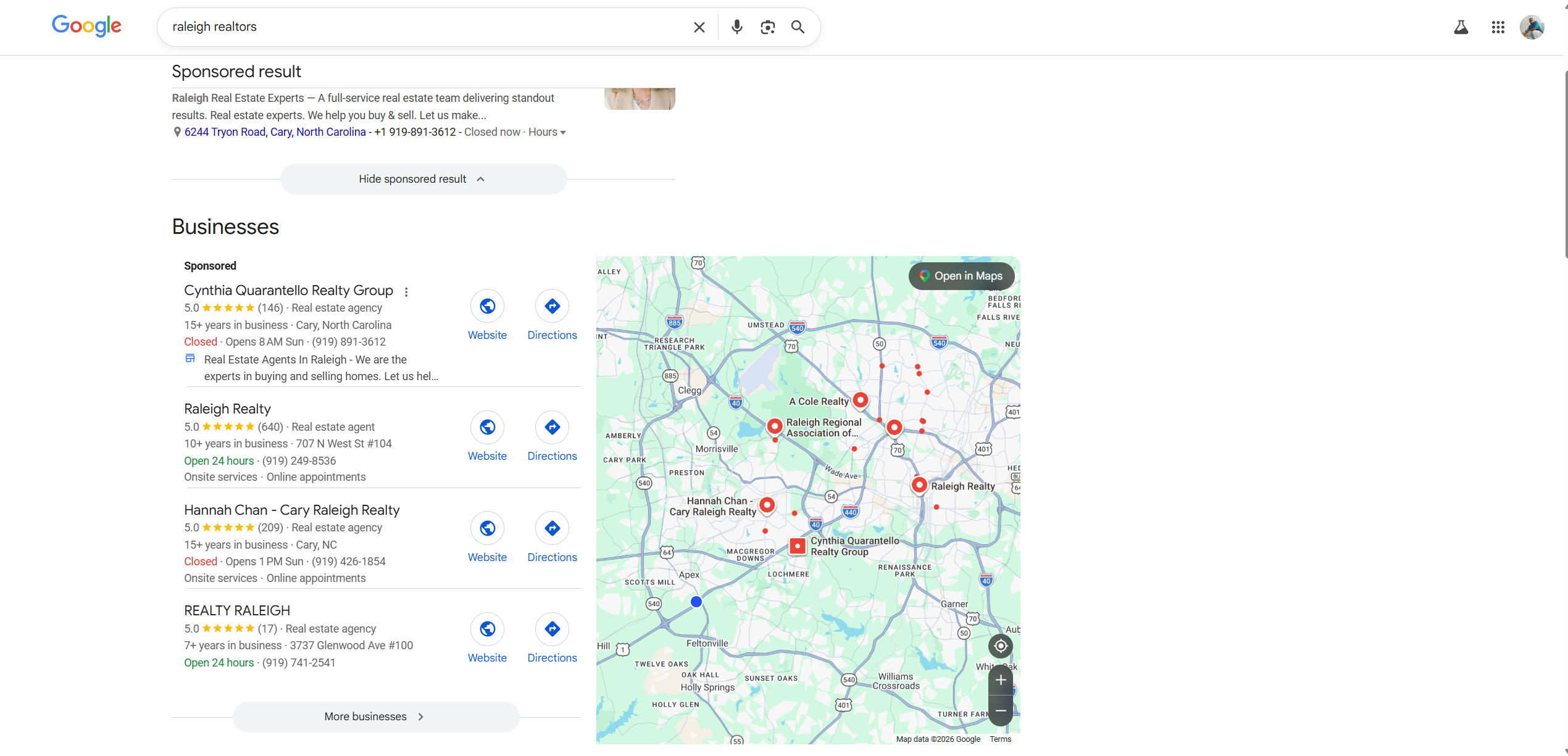
Search engine optimization is the most powerful long-term lead generation strategy in real estate because it generates free, high-intent leads month after month. When someone types "homes for sale in [your city]" or "best real estate agent in [your area]" into Google, you want your name at the top.
Local SEO for real estate agents involves three pillars:
Google Business Profile Optimization
Your Google Business Profile (formerly Google My Business) is often the first thing buyers and sellers see. Complete every field. Add photos of properties, your office, and your team. Post updates weekly. Most importantly, generate reviews consistently. Agents with 50-plus five-star reviews dominate the local map pack. Ask every client for a review after closing. The ones who had a great experience will happily oblige.
Hyperlocal Content
Create blog posts and landing pages targeting specific neighborhoods, zip codes, and communities. "Moving to [Neighborhood]? Here's Everything You Need to Know" style articles rank well because they match exactly what relocating buyers are searching for. Write about local schools, restaurants, commute times, and market conditions. Google rewards this kind of topical authority.
On-Page SEO Fundamentals
Every page on your site needs a unique title tag, meta description, H1 heading, and natural keyword usage. Your homepage should target your primary market ("Real Estate Agent in [City]"), and interior pages should target long-tail variations. Internal linking between your blog posts, neighborhood pages, and listing pages builds authority and keeps visitors on your site longer, and both are signals Google values.
4. Run Google Ads for Immediate Lead Flow
SEO takes time. Google Ads delivers leads today. The key is targeting high-intent keywords, meaning search terms that signal someone is ready to act, not just browsing.
High-intent keywords for real estate agents include:
- "Homes for sale in [city/neighborhood]"
- "Real estate agent near me"
- "Sell my house fast [city]"
- "What is my home worth"
- "Houses for sale under [price] in [area]"
The economics of Google Ads in real estate are compelling. The average cost per lead through Google Ads is $30 to $60 in most markets, with conversion rates of 3 to 5 percent from lead to closing. One closed transaction from a $45 lead can net you $8,000 to $15,000 in commission. That is an ROI most businesses would kill for.
The critical mistake agents make is sending Google Ads traffic to their homepage. Instead, build dedicated landing pages for each campaign. A "Sell My House Fast in Austin" ad should land on a page specifically about selling in Austin with a home valuation form, not your generic homepage with 14 navigation links. Fewer distractions equal higher conversion.
5. Use Social Media to Build Trust and Generate Leads
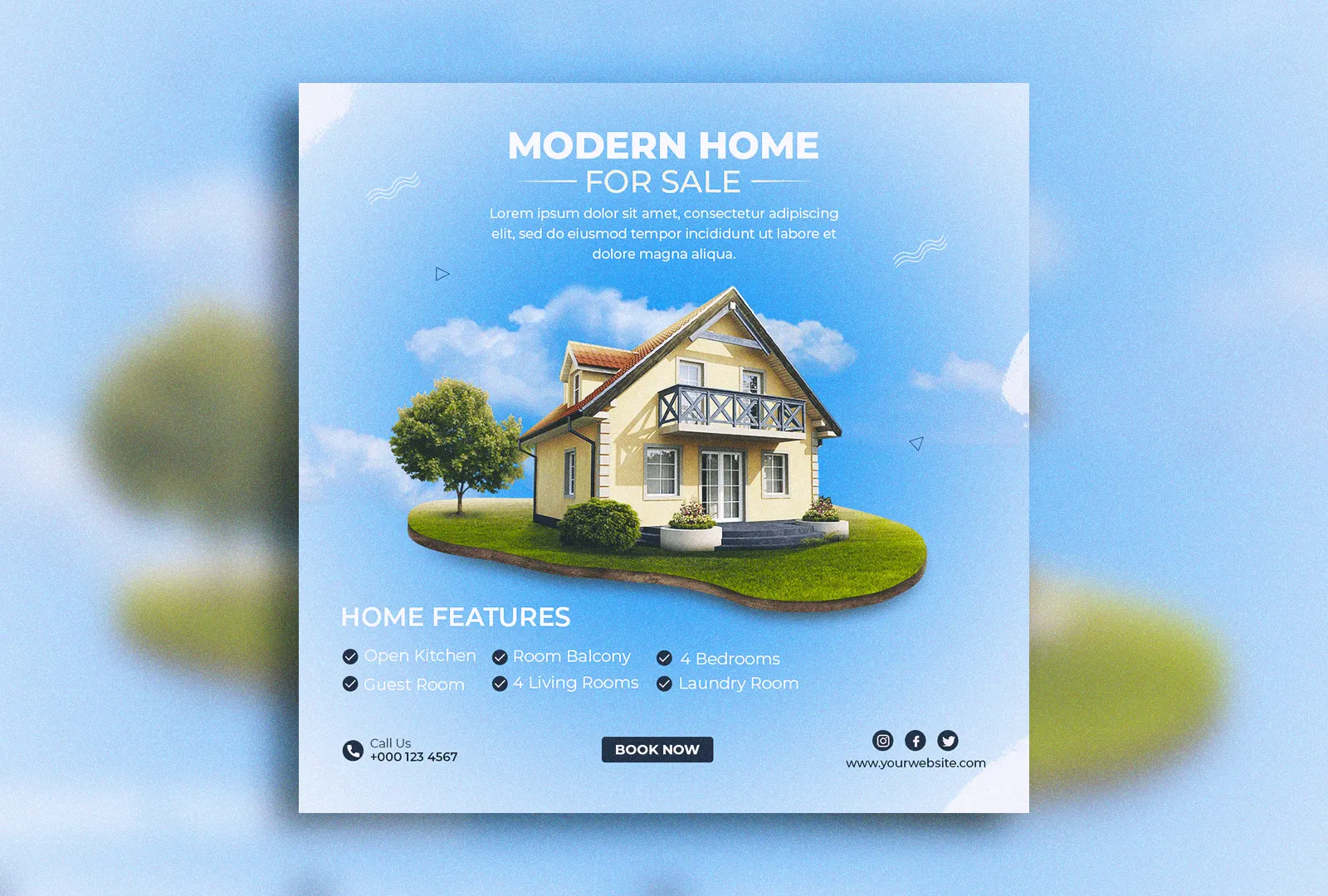
Social media does not generate real estate leads the same way Google does. Google captures demand by reaching people actively searching. Social media creates demand because it puts you in front of people before they even realize they need an agent. That is why social media is a top-of-funnel play that feeds your other lead generation channels.
The platforms that work best for real estate agents in 2026:
Instagram and Instagram Reels
Visual storytelling is real estate's superpower. Post property tours, before-and-after staging photos, market updates, and behind-the-scenes content. Reels consistently outperform static posts in reach. A 30-second walkthrough of a new listing can reach 5,000 to 50,000 people in your local market, more than any open house ever will.
Facebook and Facebook Groups
Facebook remains the largest platform for adults 30 to 65, your primary home buyer and seller demographic. Join and contribute to local community groups. Answer questions about the housing market. Share your blog content. Run Facebook Lead Ads that let users submit their info without leaving the platform, and these convert at 2 to 4 times the rate of ads that send users to external landing pages.
YouTube
YouTube is the second-largest search engine in the world, and real estate content performs exceptionally well on it. Neighborhood tour videos, market update vlogs, and "Day in the Life of a Real Estate Agent" content build trust and authority. The best part: YouTube videos rank in Google search results, giving you visibility on both platforms simultaneously.
For more specific ideas, check out our guide on real estate social media post ideas that actually generate leads.

6. Build an Email Nurture System That Converts Over Time
Here is a stat that should change how you think about lead follow-up: 81 percent of real estate transactions happen with the agent who follows up most consistently, not the one who follows up first. Most agents give up after two or three attempts. The agents who build automated email nurture sequences convert leads that everyone else abandons.
Your email system should include:
- Immediate response - An automated email within 5 minutes of lead capture acknowledging their inquiry and setting expectations
- Drip sequences - A series of 8 to 12 emails spaced over 60 to 90 days providing value: market reports, neighborhood guides, homebuying tips, and listing alerts
- Monthly newsletters - Ongoing market updates and new listings to stay top of mind with your entire database
- Segmentation - Buyers and sellers have different needs. First-time buyers need education. Luxury sellers need proof of marketing capability. Segment your list and personalize your messaging
The math on email marketing is undeniable. Email generates $42 for every $1 spent, the highest ROI of any marketing channel. Platforms like Mailchimp, Follow Up Boss, or kvCORE make automation straightforward. Set it up once, and your nurture system runs forever.
7. Master Open Houses as Lead Generation Events
Most agents treat open houses as a favor to their seller. Smart agents treat open houses as lead generation goldmines. The buyers who walk through an open house are actively in the market. They are physically spending their weekend looking at homes. That is about as high-intent as it gets.
To maximize leads from every open house:
- Require sign-in - Use a digital sign-in system (not a paper sheet that no one fills out honestly) that captures name, email, phone, and "Are you working with an agent?"
- Promote aggressively - Post to Facebook, Instagram, Nextdoor, and local community groups 3 to 5 days before the event. Boost the post for $20 to $50 for exponentially more reach
- Provide value beyond the home - Have a market report printout, a neighborhood guide, or a buyer's checklist available. These position you as an expert, not just a door-opener
- Follow up the same day - Call or text every attendee within 4 hours. "Thanks for visiting 123 Oak Street today! Do you have any questions about the property or the neighborhood?"
For 30 more ideas on maximizing your open houses, read our complete guide on open house ideas that attract buyers and generate leads.

8. Generate Seller Leads with Home Valuation Tools
Seller leads are the highest-value leads in real estate. One listing generates buyer inquiries, open house contacts, sign calls, and online traffic. It is a lead generation machine in itself. The fastest way to attract seller leads online is with a home valuation landing page.
The concept is simple: a homeowner enters their address, and they receive an estimated value of their property. In exchange, you capture their name, email, phone number, and address, the four data points you need to begin a listing conversation.
Why this works so well: homeowners are curious about their home's value even when they are not actively planning to sell. A study by Qualia found that 68 percent of homeowners check their home value at least once per year. By capturing those early-stage prospects, you are building relationships months or even years before they list, putting you first in line when they are ready.
Run Facebook ads targeting homeowners in specific zip codes with the message: "What's your home worth in today's market? Get a free instant valuation." These ads consistently generate leads at $3 to $12 per lead, some of the cheapest leads available in real estate marketing.
9. Build a Referral System That Generates Leads on Autopilot
Referrals remain the number-one source of business for top-producing agents. According to NAR, 38 percent of buyers found their agent through a referral from a friend, neighbor, or relative. The problem is that most agents treat referrals as something that happens passively. The best agents build systems around referrals.
A referral system includes:
- Past client touchpoints - Contact your past clients 12 to 18 times per year through a mix of email, phone calls, handwritten notes, pop-by gifts, and event invitations. The goal is to stay top of mind so they think of you the instant someone mentions buying or selling
- A direct ask - Most agents never ask for referrals. At closing, say: "I loved working with you. The biggest compliment you can give me is sending friends and family my way. Is there anyone you know who might be thinking about making a move?"
- Referral incentives - A $100 gift card, a dinner at a nice restaurant, or a charitable donation in their name for every referral that leads to a closing. Check your state's regulations on referral incentives, but most allow agent-to-consumer gifts under a reasonable threshold
- Strategic partnerships - Build relationships with mortgage brokers, financial advisors, divorce attorneys, estate attorneys, home inspectors, and contractors. These professionals interact with people in life transitions that often involve real estate. A mortgage broker who sends you two buyer leads per month is worth more than any ad campaign
10. Leverage Video Marketing to Stand Out From Every Other Agent
Video is no longer optional in real estate marketing. It is the most consumed content format on the internet, and agents who use video generate 403 percent more inquiries than those who do not. Yet only 9 percent of agents create video content consistently, which means the opportunity to differentiate is massive.
Types of video that generate real estate leads:
- Listing tours - Walk through properties with commentary. These rank on YouTube and Google and drive direct inquiries
- Market updates - Monthly 2-to-3-minute videos covering local stats: median price, inventory, days on market. Position yourself as the local market expert
- Neighborhood guides - "Why People Love Living in [Neighborhood]" videos with footage of parks, restaurants, schools, and streetscapes. These attract relocating buyers searching for that area
- Testimonial videos - A 60-second clip of a happy client is more powerful than 50 written reviews
- Educational content - "5 Mistakes First-Time Buyers Make" or "How to Prepare Your Home for Sale" videos build trust before a prospect ever contacts you
You do not need a production crew. A smartphone, a $30 lapel microphone, and natural lighting are enough. Authenticity outperforms polish every time. Post every video on YouTube, Instagram Reels, TikTok, and Facebook for maximum distribution.
11. Use Direct Mail in a Digital World
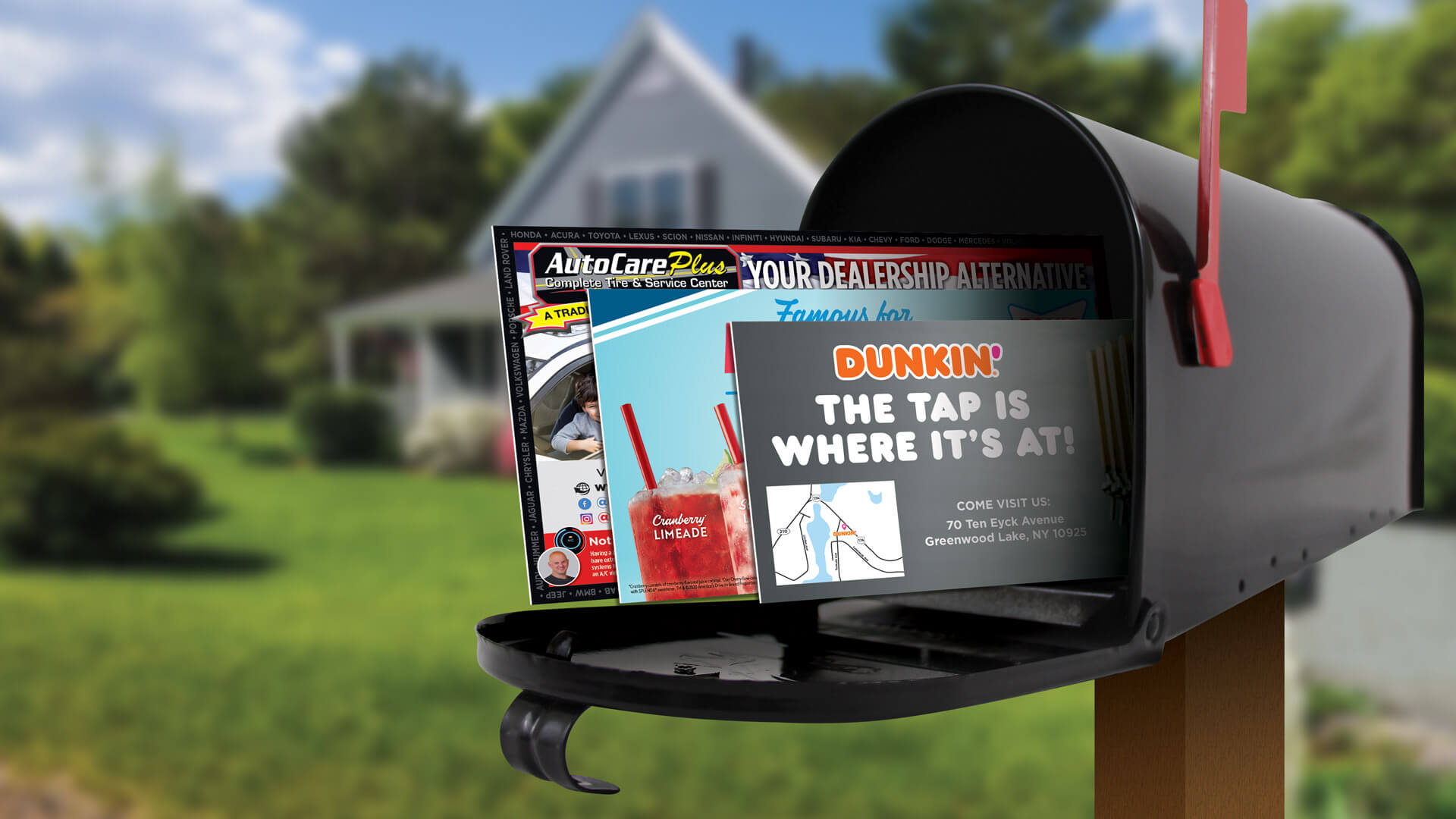
Direct mail is not dead. It is just underused, which makes it more effective for agents who do it right. The average American receives fewer than 2 pieces of marketing mail per day compared to 120 or more emails. Your postcard has a much better chance of being seen than your email.
The direct mail strategies that generate the best ROI for real estate agents:
- Just Sold postcards - Send to every home within a half-mile radius of your closed transaction. Include the sale price, days on market, and "Thinking about selling? Your home may be worth more than you think"
- Market update mailers - Quarterly postcards with hyperlocal stats for a specific neighborhood or subdivision. Homeowners love knowing what their neighbors' homes are selling for
- Geographic farming - Pick 500 to 1,000 homes in a target area and mail them consistently every month for 12 months. It takes 6 to 8 touches before most homeowners recognize your name. Consistency is everything - sporadic mailers are wasted money
The key to making direct mail work as a lead generation channel is including a clear call to action with a trackable URL or QR code. "Scan this code to see what your home is worth" sends them to your valuation page where you capture their information. Now offline marketing feeds your digital pipeline.
12. Prospect Expired Listings and FSBOs
Expired listings and For Sale By Owner (FSBO) properties represent some of the warmest leads in real estate because these are homeowners who have already demonstrated they want to sell. They just need the right agent.
Expired Listings
When a listing expires, the homeowner is frustrated. Their previous agent failed to sell the home. They still want to sell. And within 24 hours of expiration, every agent in the market is calling them. The agents who win these listings are the ones who lead with value instead of a pitch.
Instead of calling and saying "I can sell your home," send a packet that includes a custom marketing plan, a comparative market analysis showing why their home may have been priced incorrectly, and examples of your marketing, including professional photos, single-property websites, and social media reach. Show them what their previous agent was missing.
FSBOs
FSBO sellers are trying to save on commission, but the vast majority, over 90 percent, eventually list with an agent. Your job is to be the agent they choose. Build the relationship by offering genuinely helpful advice without a hard sell. Offer to send them a market report for their area. Offer to review their listing photos. The FSBO who sees you as a helpful resource will call you first when they realize they need professional help.

13. Host Community Events and Workshops
Hosting events positions you as a community leader, not just another agent trying to sell something. Events generate leads by creating genuine face-to-face connections in a low-pressure environment.
Event ideas that work for real estate lead generation:
- First-time homebuyer workshops - Partner with a mortgage broker and title company. Teach the homebuying process, cover down payment assistance programs, and collect contact info from every attendee. These workshops routinely attract 20 to 40 people, and 60 to 70 percent are ready to buy within the next 12 months
- Home seller seminars - "How to Sell Your Home for Top Dollar in 2026" draws homeowners who are actively considering listing. Provide genuine market data and staging tips. Every attendee is a potential listing
- Community events - Sponsor a neighborhood block party, a holiday toy drive, or a local 5K run. These do not generate leads directly, but they build the name recognition and goodwill that make all of your other lead generation strategies more effective
14. Invest in Paid Lead Generation Platforms
Sometimes the fastest path to leads is buying them. Paid lead generation platforms give you an instant pipeline, but the quality and cost vary dramatically. Here is how the major platforms compare in 2026:
| Platform | Cost Per Lead | Lead Type | Best For |
|---|---|---|---|
| Zillow Premier Agent | $20–$500 | Buyer leads | Agents in less competitive markets |
| Realtor.com | $20–$150 | Buyer leads | Agents wanting shared leads at lower cost |
| Google Ads (PPC) | $30–$60 | Buyer & seller | Agents who want exclusive, high-intent leads |
| Facebook Lead Ads | $3–$15 | Buyer & seller | Agents wanting volume and brand awareness |
| CINC | $10–$30 | Buyer leads | Teams with ISAs to handle high volume |
| Real Geeks | $10–$25 | Buyer leads | Solo agents wanting an all-in-one CRM and site |
The biggest mistake agents make with paid leads is not following up fast enough. Studies show that leads contacted within 5 minutes are 21 times more likely to convert than leads contacted after 30 minutes. If you are buying leads and taking hours to respond, you are wasting your ad spend. Automate your initial response and have a system for immediate follow-up.
For a deeper breakdown, read our full comparison of the best lead generation tools for real estate agents.
15. Turn Every Listing Into a Lead Generation Machine
Most agents think of a listing as one transaction. The best agents think of a listing as a lead generation engine that produces multiple clients from a single property. Here is how to maximize leads from every listing you take:
- Create a single-property website with lead capture - every visitor who wants more info gives you their contact details
- Run Facebook and Instagram ads promoting the listing to buyers in your target area. A $50 to $100 ad budget can generate 15 to 30 buyer leads from a single listing
- Hold multiple open houses - not just the first weekend. Mega open houses, twilight events, and broker opens all attract different audiences
- Send Just Listed mailers to neighbors - they know people who want to live in their neighborhood
- Post a listing walkthrough video on YouTube, Instagram Reels, and TikTok. Include your contact info and a link to the property website
- Follow up with every buyer lead who inquired about the listing but did not buy it. They are still looking. They still need an agent
A single listing, marketed properly, can generate 20 to 50 new leads. If you close just one additional deal from those leads, you have doubled the revenue from that listing. This is the power of treating every listing as a marketing event, not just a transaction. Learn more in our guide on how to market a real estate listing for maximum exposure.
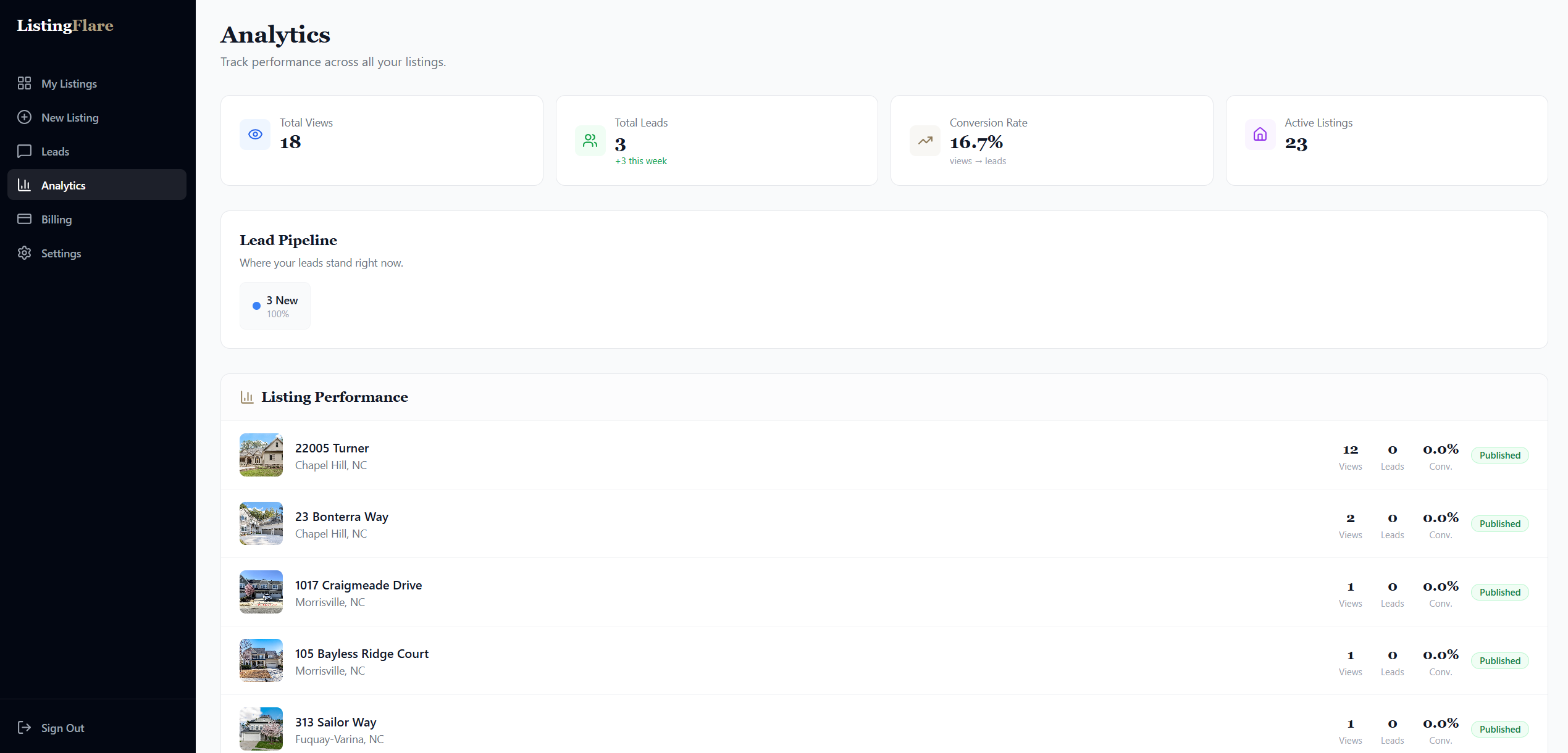
How to Track and Measure Your Lead Generation Results
You cannot improve what you do not measure. Every lead generation strategy above needs tracking so you know what is working, what is not, and where to invest more time and money.
The metrics that matter:
- Cost per lead (CPL) - How much are you spending to acquire each lead? Calculate separately for each channel
- Lead-to-appointment rate - What percentage of leads agree to a consultation or showing? This measures lead quality
- Appointment-to-closing rate - What percentage of appointments result in a closed transaction? This measures your sales ability
- Cost per acquisition (CPA) - Total marketing spend divided by total closings. This is your true cost to win a client
- Lifetime value (LTV) - The average revenue from a client over their lifetime, including repeat transactions and referrals. Most agents find their LTV is 2.5 to 3 times their initial commission
Use a CRM like Follow Up Boss, LionDesk, or kvCORE to track lead sources, tag every contact, and monitor your pipeline. When you can see that Google Ads leads convert at 4 percent and Zillow leads convert at 1.5 percent, the decision about where to spend your next dollar becomes obvious.
The Real Estate Lead Generation Action Plan
Knowing 15 strategies is useless if you do not implement them. Here is a prioritized action plan based on where you are in your career:
New Agents (0–2 Years)
- Set up your Google Business Profile and start collecting reviews from day one
- Host open houses every weekend - for your listings and your colleagues' listings
- Create a lead generation plan specifically designed for new agents
- Start posting on Instagram and Facebook daily
- Build an email list and set up a basic drip sequence
- Door knock or cold call FSBOs and expired listings 2 hours per day
Experienced Agents (3–7 Years)
- Invest in SEO and start publishing hyperlocal blog content twice per month
- Run Google Ads targeting high-intent buyer and seller keywords
- Create single-property websites for every listing with ListingFlare
- Launch a geographic farm with monthly direct mail
- Build strategic referral partnerships with 5 to 10 professionals
- Start a YouTube channel with weekly market updates and listing tours
Top Producers (8+ Years)
- Systematize and delegate - hire an ISA or virtual assistant for lead follow-up
- Scale paid advertising across Google, Facebook, and Instagram
- Build a referral-based business that generates 40 percent or more of your closings from past clients
- Host quarterly community events and homebuyer workshops
- Develop a personal brand through video content and speaking engagements
- Track every metric and optimize ruthlessly
Common Real Estate Lead Generation Mistakes to Avoid
Even the best strategies fail when executed poorly. Here are the most common mistakes agents make with lead generation:
- Chasing shiny objects - Jumping from one strategy to the next without giving any single approach enough time to work. SEO takes 3 to 6 months. Direct mail takes 6 to 12 months. Commit to your plan
- Ignoring follow-up - The average lead needs 8 to 12 touchpoints before converting. Most agents stop at 2. The fortune is in the follow-up
- Not tracking lead sources - If you do not know where your leads come from, you cannot optimize your spend. Tag every lead in your CRM
- Spending on ads before building systems - Driving 100 leads per month to a website with no lead capture is burning money. Build the system first, then add fuel
- Doing everything yourself - Lead generation is a full-time job on top of your full-time job. Automate what you can, delegate what you cannot, and focus your personal time on the activities with the highest dollar-per-hour value: listing appointments and closings
Frequently Asked Questions About Real Estate Lead Generation
What is the best way to generate real estate leads for free?
The best free lead generation methods are optimizing your Google Business Profile, posting consistently on social media, hosting open houses, asking past clients for referrals, and creating SEO-optimized blog content. These methods require time instead of money but build long-term, sustainable lead flow. Of these, Google Business Profile optimization and referrals typically produce the highest-quality leads with the fastest results.
How much should a real estate agent spend on lead generation?
The industry standard recommendation is 10 to 15 percent of your gross commission income (GCI). A new agent earning $60,000 should budget $6,000 to $9,000 per year, or $500 to $750 per month. The key is allocating your budget across multiple channels, so do not put all your money into one platform, and tracking your cost per acquisition to ensure positive ROI on every dollar.
How long does it take for real estate lead generation to produce results?
It depends on the strategy. Paid advertising (Google Ads, Facebook Ads) can generate leads within 24 to 48 hours. Open houses and door knocking produce immediate contacts. SEO and content marketing take 3 to 6 months to gain traction. Referral systems and geographic farming take 6 to 12 months to mature. The best approach is combining quick-win tactics with long-term strategies so you always have both immediate pipeline and growing momentum.
What is a good conversion rate for real estate leads?
Industry averages vary by lead source. Internet leads (Zillow, Google Ads) convert at 1 to 3 percent. Referrals convert at 15 to 25 percent. Open house leads convert at 3 to 5 percent. Your own website with proper nurturing can convert at 4 to 8 percent. Focus on improving conversion at every stage, from lead to appointment, appointment to contract, and contract to closing, rather than just generating more raw leads.
Should I buy leads from Zillow or generate my own?
Both can work, but generating your own leads is more sustainable and profitable long-term. Zillow leads are shared among multiple agents, cost $20 to $500 each, and convert at under 2 percent in most markets. Your own leads from Google Ads, SEO, single-property websites, and referrals are exclusive to you, cost less over time, and convert at higher rates because there is no competition. If you use Zillow, treat it as one channel among many, not your entire strategy. Read our full analysis on how to stop losing leads to Zillow.
What CRM should real estate agents use for lead management?
The best CRM depends on your team size and budget. Follow Up Boss is the top choice for mid-to-large teams with its speed-to-lead features. LionDesk is excellent for solo agents with its built-in texting and video messaging. kvCORE is ideal if you want an all-in-one platform with a website, CRM, and lead generation tools. The most important factor is not which CRM you choose. It is that you actually use it consistently to track, tag, and follow up with every lead.